Published: April 15, 2026
For decades, drinking alcohol has been the default way to relax, celebrate, and socialize. But today, that norm is shifting.
A growing number of consumers, especially younger ones, are actively cutting back, embracing moderation, or replacing alcohol altogether with alternatives that better align with their health and wellness goals.
This shift has sparked the rapid rise of a new beverage category: alcohol alternatives. From hop water, which mimics the taste of beer without alcohol, to THC seltzers that offer a controlled, social buzz, these beverages are redefining what it means to have a drink.
What started as a niche movement is now reshaping the entire beverage industry, driven by innovation, changing social norms, and a desire for healthier options.
What We’ll Cover in This Piece:
Try Ollie Today
Affordable, Industry-Leading Brewery Software
Want to learn why breweries everywhere are ditching spreadsheets and switching to Ollie? Book some time with our team to learn more!
Why are alcohol alternatives like hop water and THC seltzers growing so fast?
Alcohol alternatives are growing quickly because consumers want the experience of drinking without the negative side effects. These beverages offer social, flavorful, and functional experiences without hangovers, excess calories, or loss of control.
The growth is being fueled by the “sober curious” movement, declining alcohol consumption among younger generations, and innovation in categories like cannabis beverages. Sales of THC seltzers alone are projected to grow from $360M in 2024 to over $4B by 2033, reflecting massive consumer demand.
Beyond health, there’s a cultural shift happening: Consumers are exploring options that allow them to stay present, feel better, and still participate in social rituals.
Key Facts:
- THC seltzers are projected to grow to more than $4B globally by 2033.
- The “sober curious” movement is driving reduced alcohol consumption.
- Younger consumers are actively choosing to drink less alcohol.
- Alcohol alternatives deliver social experience without hangovers.
Return to top
What are alcohol alternatives, and why are people choosing them?
Alcohol alternatives are beverages designed to replace traditional alcoholic drinks while still delivering flavor, ritual, and often functional effects like relaxation or mood enhancement. This category includes nonalcoholic beer, hop water, adaptogen drinks, and THC-infused beverages.
People are choosing these drinks because they offer more control and align with modern wellness priorities. Many are low-calorie, alcohol-free, and designed to support specific outcomes like relaxation or stress relief without the drawbacks of alcohol.
There’s also a behavioral shift at play. Instead of drinking to get intoxicated, consumers are increasingly drinking for how they want to feel, whether that’s calm, social, or clear-headed.
Key Facts:
- Alcohol alternatives focus on function and experience, not intoxication.
- Many are low-calorie and alcohol-free.
- Consumers are prioritizing control and wellness.
- Drinking culture is shifting toward moderation and flexibility.
Return to top
What is hop water, and how does it replace beer?
gives beer its distinctive taste. It delivers a crisp, bitter, and refreshing flavor that closely resembles beer, but contains no alcohol.
Hop water preserves the sensory experience of beer: the carbonation, aroma, and ritual of cracking open a can. But unlike beer, hop water typically has zero calories, zero sugar, and is designed to feel clean and hydrating.
This makes it especially appealing to craft beer drinkers who enjoy the taste but want to cut back on alcohol.
Key Facts:
- Hop water provides a beerlike flavor without alcohol.
- It typically contains zero calories and zero sugar.
- It appeals strongly to craft beer drinkers.
- Hop water maintains the ritual of drinking without the intoxication.
Return to top
What are THC seltzers, and why are they considered alcohol alternatives?
THC seltzers are sparkling beverages infused with small, controlled doses of THC, designed to provide an uplifting, social buzz without alcohol.
These drinks are popular because they combine precise dosing, euphoric intoxicating effects, fast onset, and no hangover, making them ideal for social settings. THC-infused beverages come in a range of flavors and potencies, from 5 mg THC to 50 mg THC per can.
Many consumers use them as a direct substitute for alcohol. They’re available online and at bars, restaurants, groceries, liquor stores, and convenience stores throughout the country.
Key Facts:
- THC seltzers deliver a controlled intoxicating experience.
- Doses range from 5 mg to 50 mg THC.
- They provide the benefits of alcohol without the downsides.
- They’re a smoke-free way to enjoy cannabis.
Return to top
How are THC seltzers evolving?
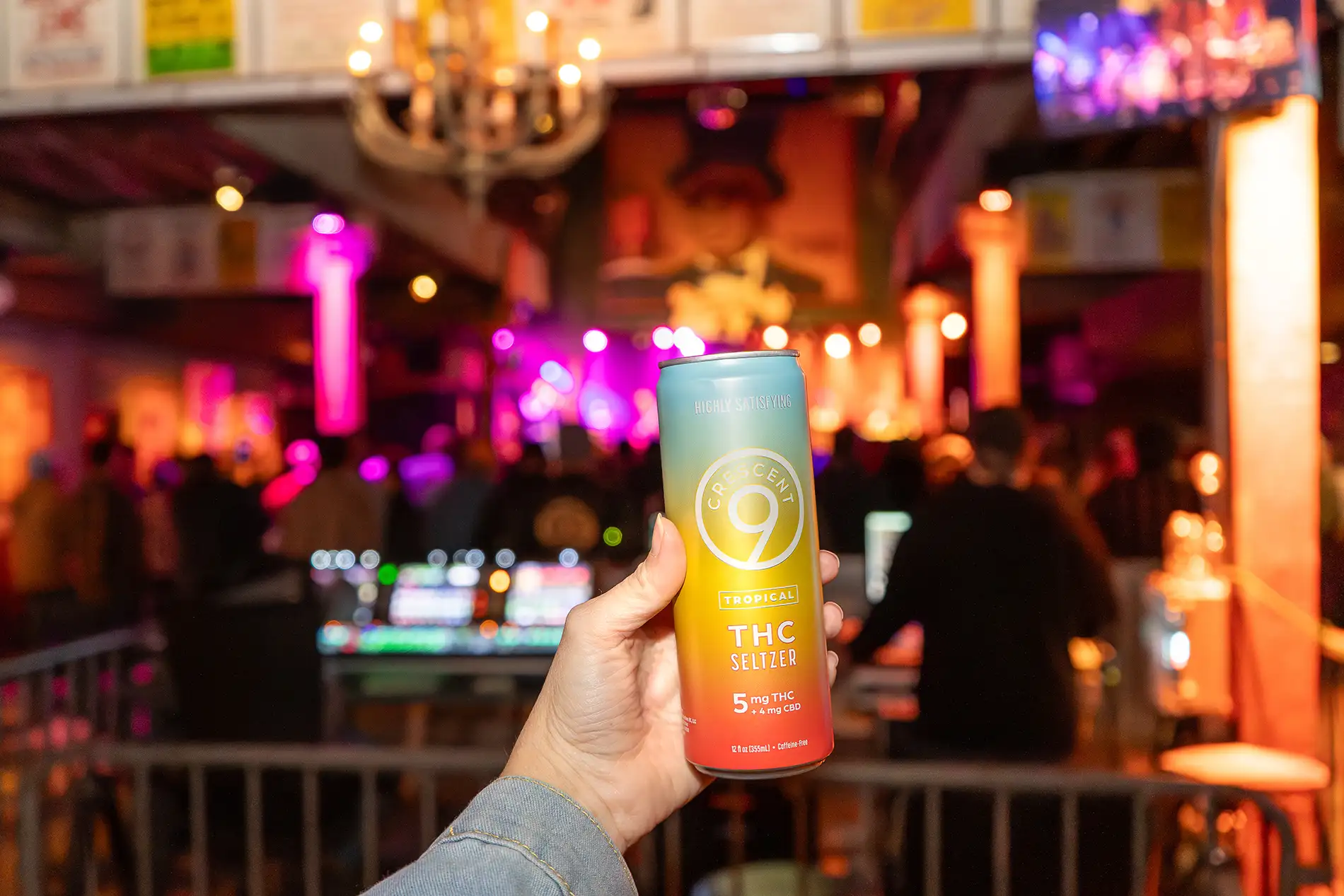
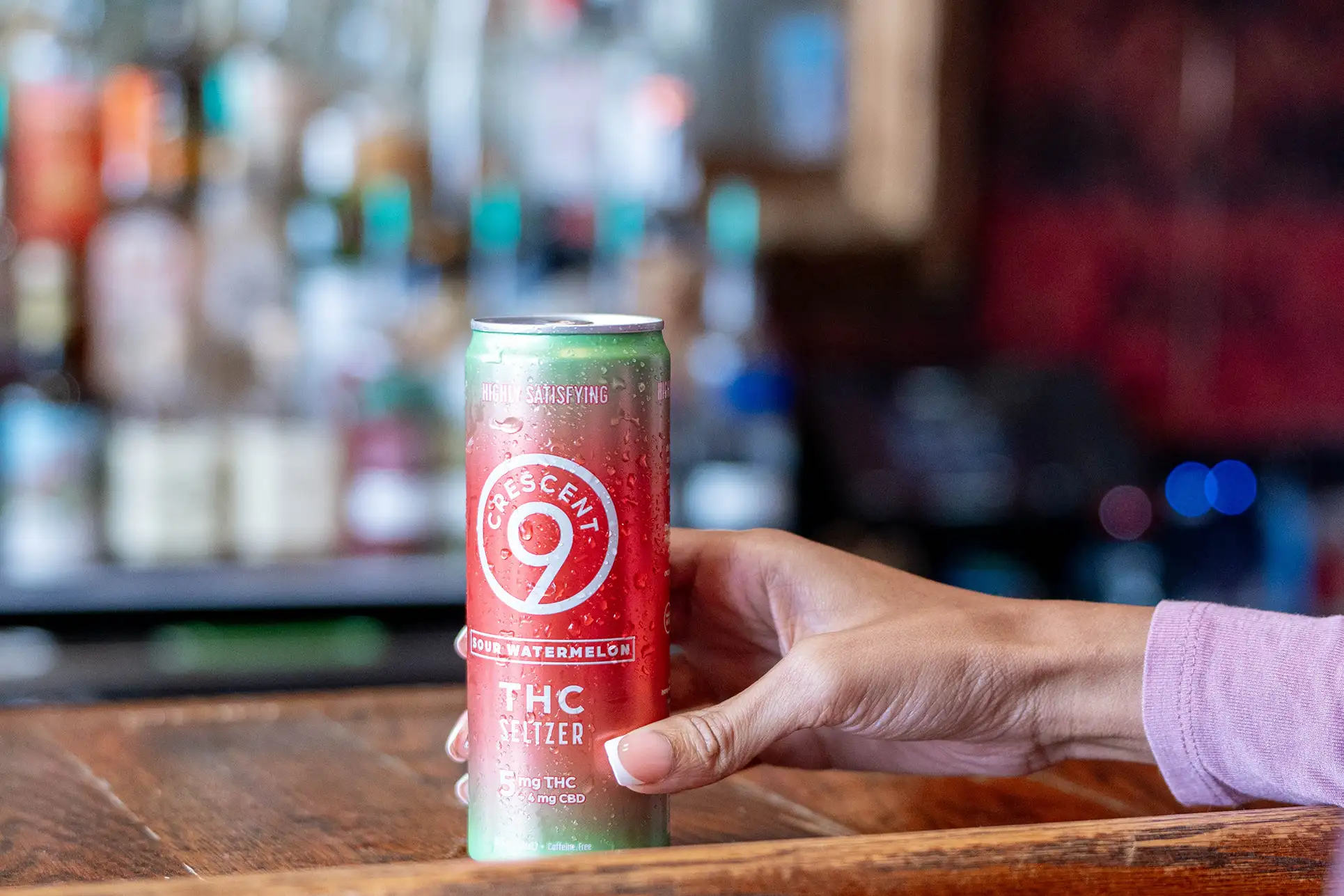
THC seltzers are rapidly evolving from niche products into mainstream alcohol alternatives, driven by better formulations, clearer dosing, and more approachable branding. The rise of brands like Crescent 9 THC Seltzer highlights how quickly consumer demand is accelerating and how these beverages are moving into everyday social occasions.
Crescent 9 serves as a strong case study for the category’s growth. Instead of positioning itself solely within cannabis culture, it leans into the broader “wellness drinks” category – offering a product that competes directly with beer, seltzers, and cocktails. With fruit-forward flavors, fast-acting effects, and a range of THC doses, it reflects what today’s consumers are actively seeking: a healthy and delicious alternative to alcohol.
This shift is especially important because it shows how THC drinks are no longer just experimental. They’re becoming normalized. Consumers aren’t just trying them once. They’re integrating them into routines like social gatherings, weekend relaxation, and even traditional happy hours. Crescent 9’s growth mirrors broader industry trends, where THC beverages are increasingly merchandised, marketed, and consumed like alcohol.
Perhaps most importantly, it demonstrates how the category is expanding beyond microdosing. While early THC drinks focused on low-dose formats, brands like Crescent 9 are helping define a wider spectrum of experiences, giving consumers the ability to choose how they want to feel, just like they would with alcohol.
Key Facts:
- THC seltzers are shifting from being niche products to mainstream alcohol alternatives.
- Crescent 9 reflects demand for predictable, social, alcohol-like experiences.
- Consumers are integrating THC drinks into a range of social occasions.
- The category is expanding beyond microdosing into wider dose ranges.
- THC beverages are increasingly competing directly with beer, wine, and spirits.
Return to top
The Bottom Line: A New Era of Drinking
Alcohol alternatives are no longer just substitutes – they’re becoming the preferred choice for many consumers. Whether it’s hop water for a refreshing, alcohol-free beer experience or THC seltzers for a controlled, social buzz, these beverages are redefining modern drinking culture.
As innovation continues and social norms evolve, the question is no longer whether people will explore alcohol alternatives. It’s which one they’ll choose.
Return to top
About The Author
Ollie Team
Content created and curated by the team at Ollie, a Next Glass company.
Our goal is to provide the beer community - especially the creators - with up-to-date industry news, tips, guides, and more! Follow us on social to keep in the know with everything Ollie!
More From Ollie